
Residency: Joranas Bružinskas – Exploring Sustainability in Analogue Photography and Image-Making
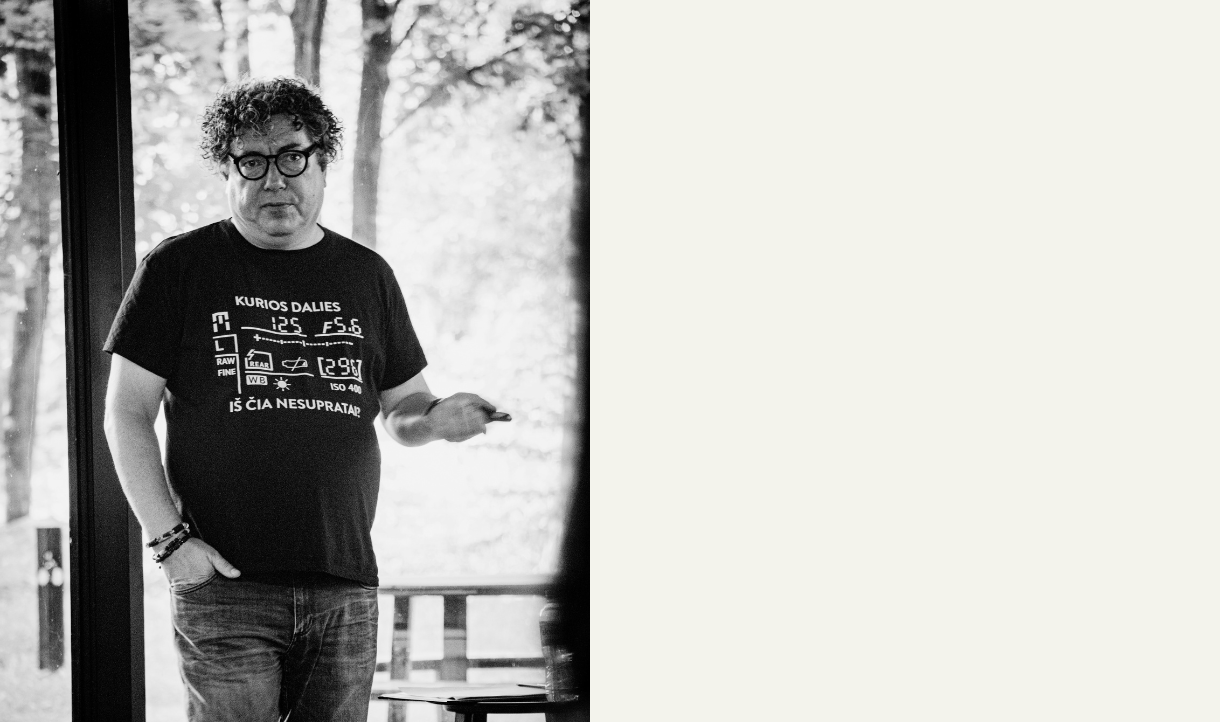
Joranas Bružinskas is an analogue photographer and photography educator from Klaipėda. His practice explores photography as a slow, material and sustainable process, offering an alternative to the constant flow of rapidly consumed digital images today. He works with analogue cameras from different periods, including large-format cameras more than a century old. He photographs on both film and photographic paper, uses expired materials, and develops his images with alternative, lower-impact developers made from coffee, beetroot and other plant-based materials.
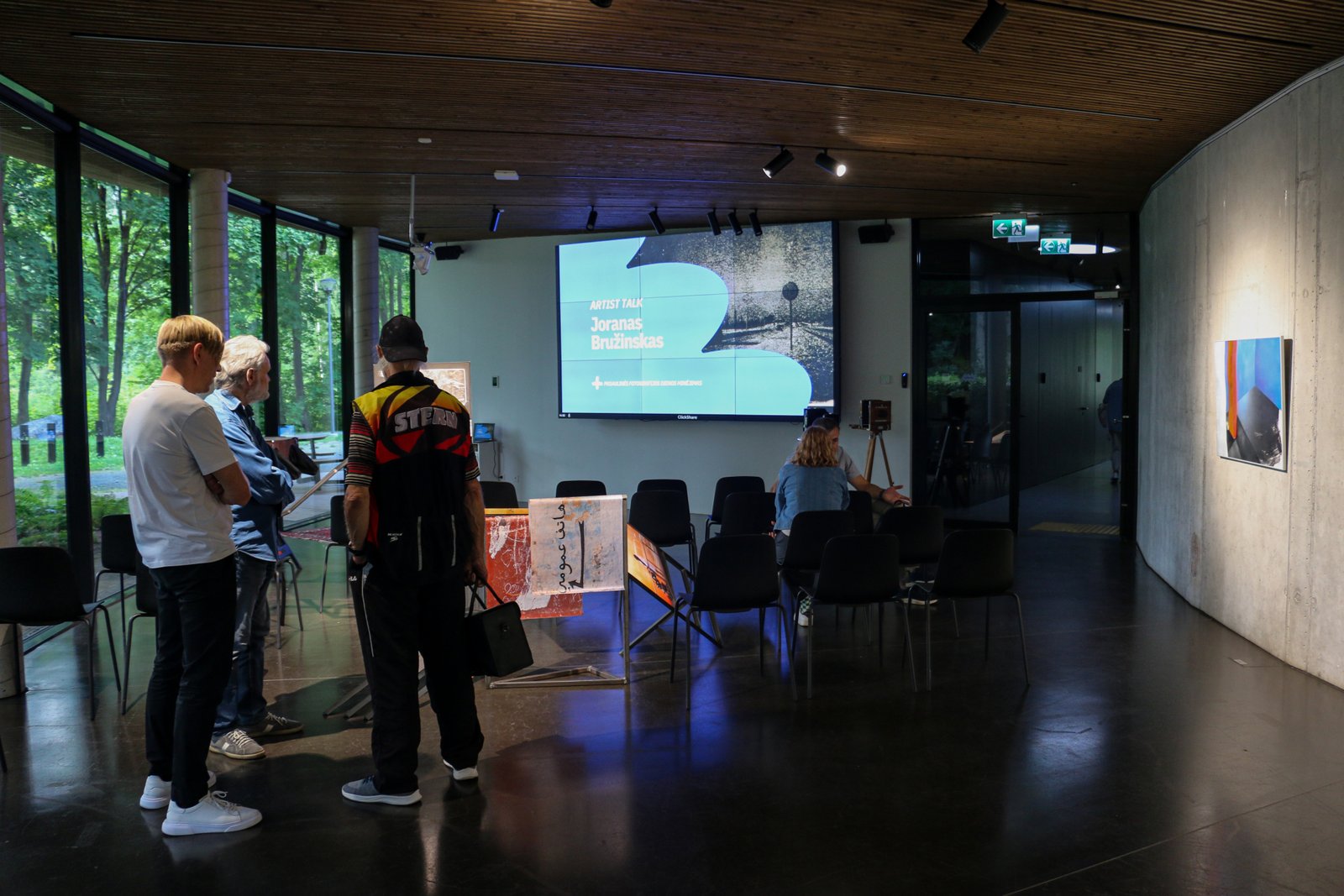
During the residency, Joranas not only sought to create new work, but also openly demonstrated the entire analogue photography process. One of his main activities was taking photographs in public using a large-format camera – the “Joranas Camera”. This gave passers-by the opportunity to observe how a unique analogue image is created.
For the artist, the final work was only one part of the process. Equally important was the act of making itself – encouraging a slower relationship with the image, the material and the surrounding environment.
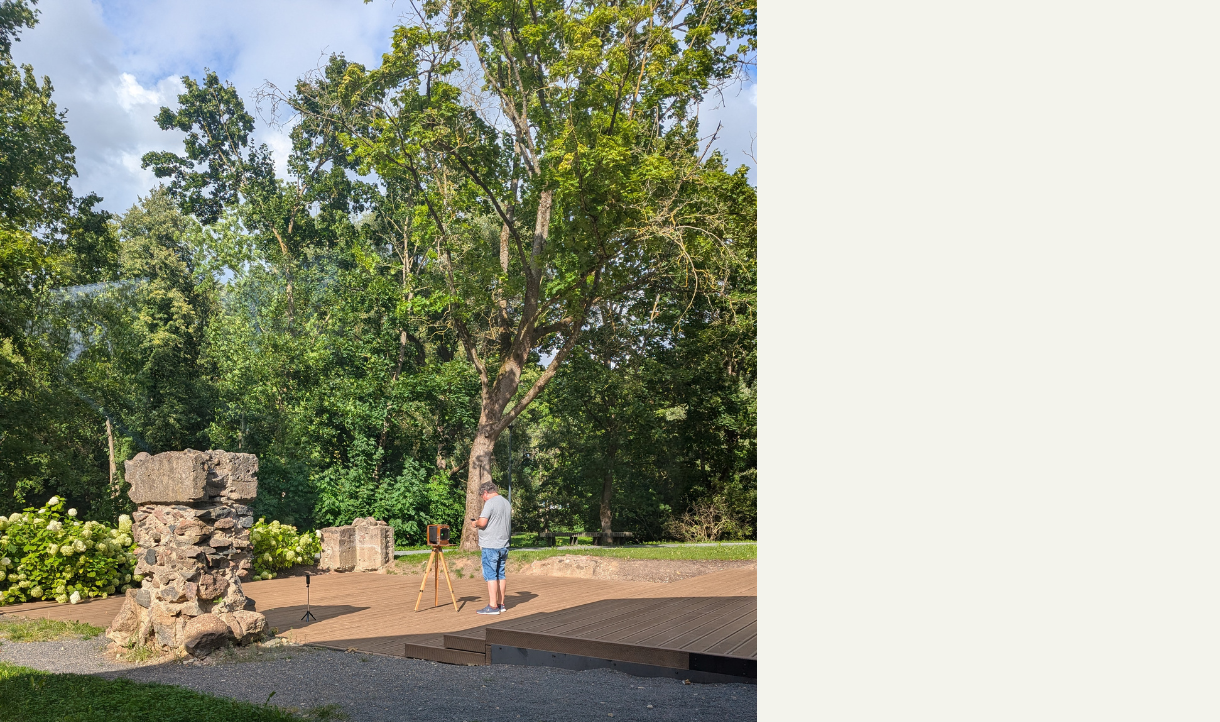
Joranas Bružinskas Artist Talk
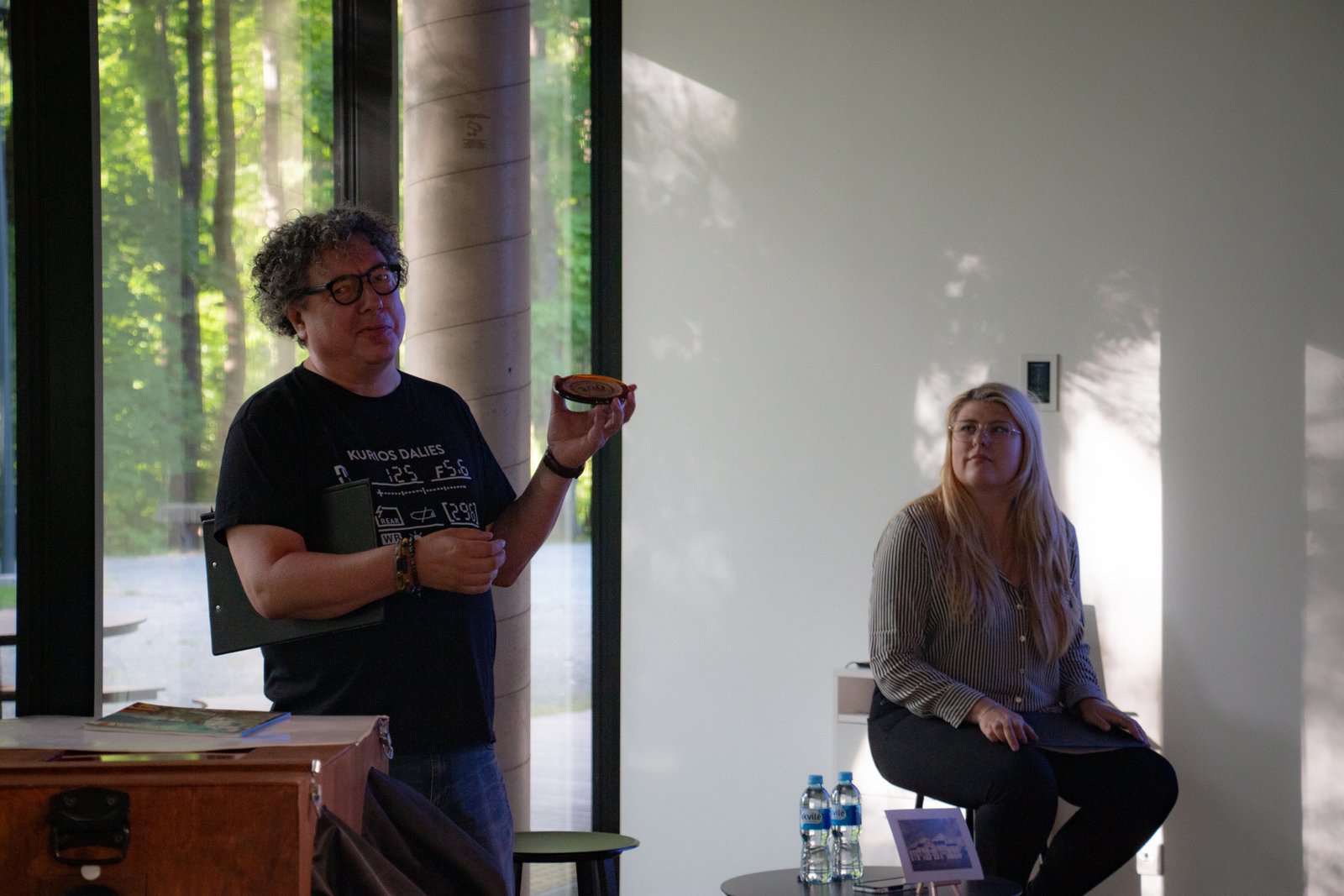
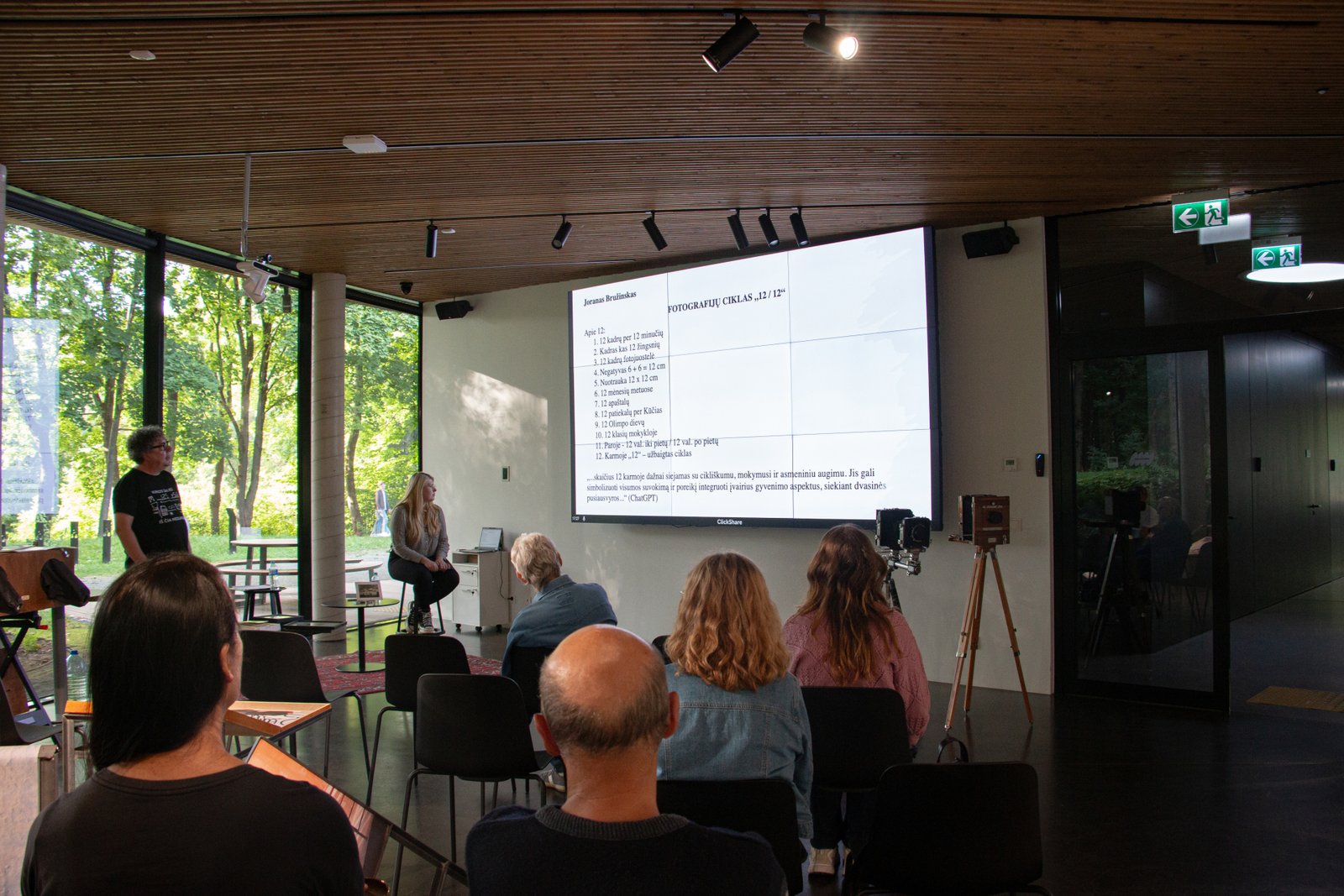
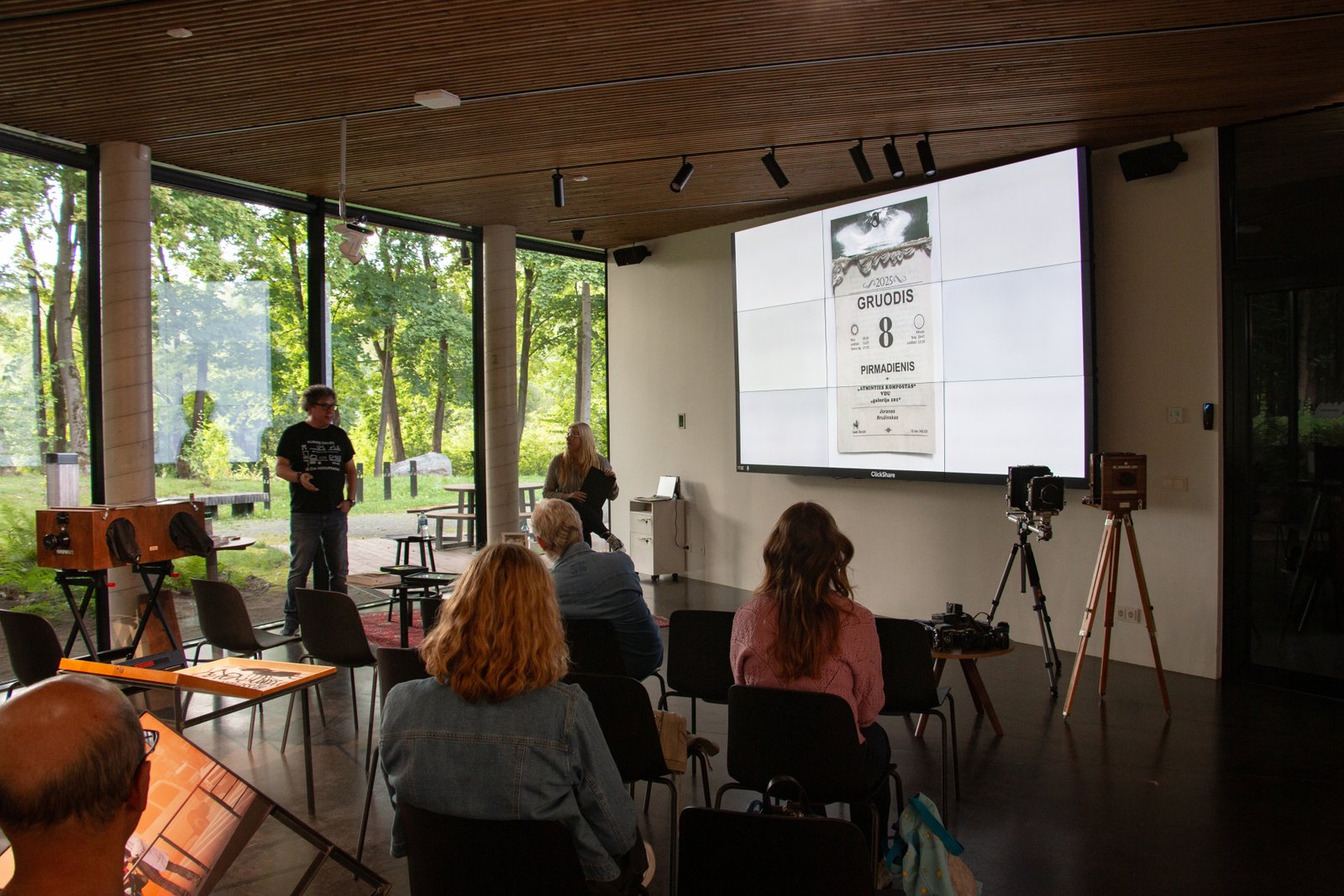
During the artist talk, Joranas Bružinskas presented his creative journey and photographic practice, tracing his path from his studies and early fascination with photography to his current artistic explorations. Speaking about his work, exhibitions and different photographic approaches, the artist shared experiences of working with unconventional locations and subjects and reflected on the possibilities of photography beyond traditional settings.
Joranas also presented one of his projects – an exhibition centred around the number 12. Due to the circumstances surrounding the COVID-19 pandemic, as well as other factors, the exhibition was held in his mother’s garden, in the greenhouse. In talking about the project, the artist revealed an unexpected aspect of the creative process: the photographed subjects themselves seemed to “resist” being presented in a public space. This encounter with resistance became an integral part of the story behind the project and its presentation.
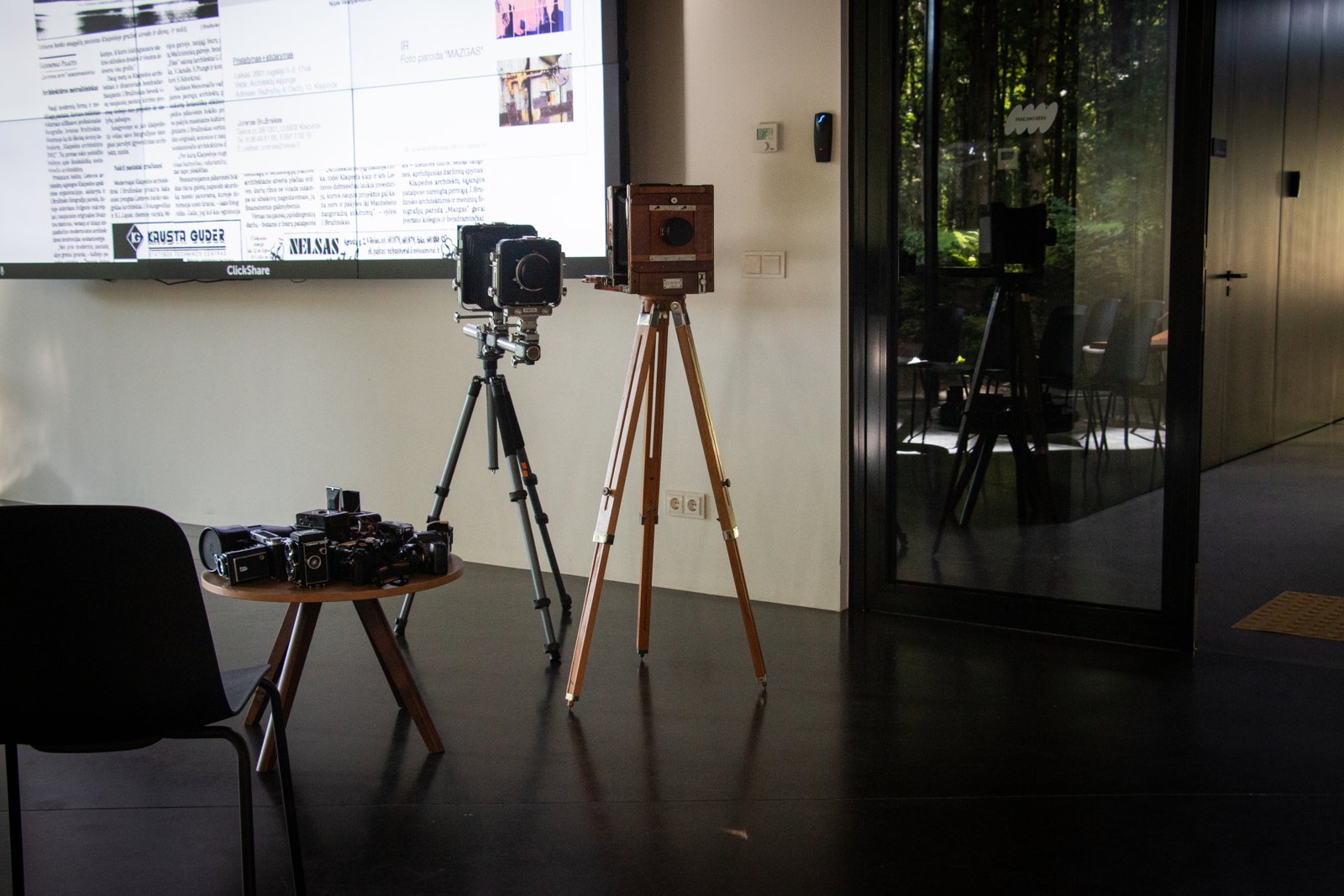
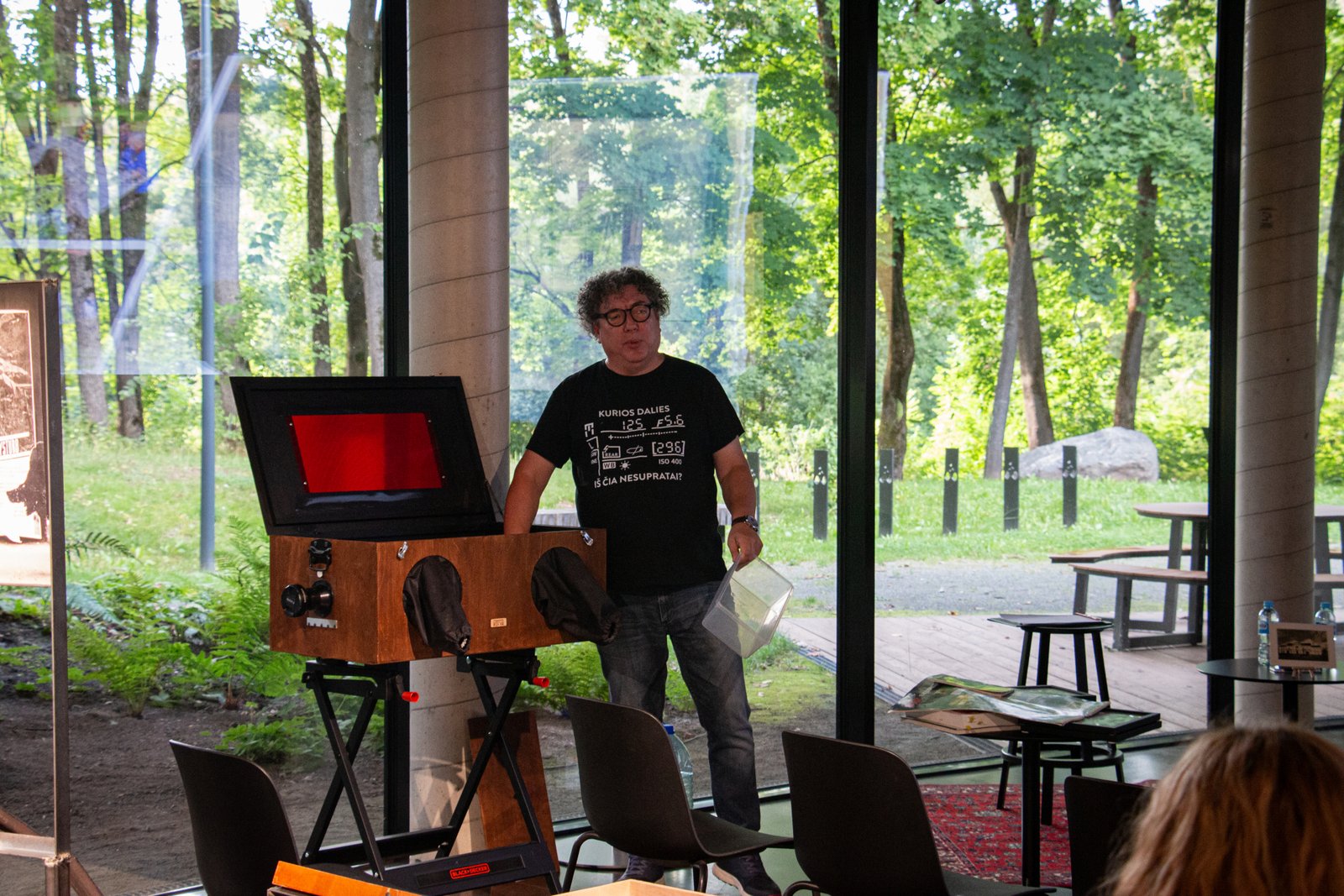
During the talk, Joranas also demonstrated his photographic equipment and collection of analogue cameras, discussing analogue photography processes and the particularities of working with film. Considerable attention was given to the ideas he was developing during the residency, including his experiments with homemade, environmentally friendly photographic developers and alternative methods of producing and using them.
The meeting gradually developed into an open conversation and discussion. The photography enthusiasts who had gathered actively joined in, asking questions, sharing their own experiences and exploring the possibilities, processes and experimental approaches of analogue photography together with the artist.
The artist talk became not only an opportunity to gain a closer insight into Joranas’ creative practice, but also an open exchange of knowledge and experience, inviting the audience to look at photography as an evolving process that remains open to experimentation.

The Culmination of the Residency – An Analogue Photography Workshop
Joranas Bružinskas brought his creative residency at Prãgiedruliai to a close with an analogue photography workshop, giving participants the opportunity to experience the slow and experimental process of analogue photography firsthand.
At the beginning of the workshop, Joranas introduced the chemical developers commonly used in photography and presented their alternatives – natural, experimental developers that he has been developing himself. Participants were introduced to Caffenol, a coffee-based developer; Beet Developer, made using beetroot; Wine Developer, created from wine; and Lupenol, an experimental plant-based developer made from vegetable peel infusions. The artist spoke about the properties of these materials, the processes involved in producing them and their potential uses in photography.
During the practical part of the workshop, participants worked with a 13 × 18 cm large-format camera and an Afghan Box-style camera. They had the opportunity not only to experience the photographic process themselves, but also to become photographic subjects, learning how to keep their bodies still during longer exposures and experiencing the patience required by slow analogue photography. Working with the large-format camera, participants also learned how to focus an image while working beneath the black focusing cloth, gaining a closer understanding of the photographic process.
The workshop also provided an opportunity to extend the ideas Joranas had been developing during his residency. The artist shared that he had collected water from the Nevėžis River during his time in Panevėžys, which he plans to use in his future creative experiments. In this way, Panevėžys and the Nevėžis River became not only the setting for his residency, but also part of his ongoing creative process, allowing the experience of the residency to continue through his future work.
Although the workshop marked the end of the residency, its results will continue to develop beyond it. Once Joranas has developed and prepared the photographs created during the workshop, the physical results will make their way to Prãgiedruliai and will later be shared with the workshop participants.


